
Technology & knowledge
Tesla Oscillator: the technology clearly explained
What is high frequency, how does the device work and where does the idea come from? Here you will find the background – factual, clear and free of jargon.
The basics
High frequency clearly explained
A frequency indicates how often an oscillation repeats itself in one second. It is measured in hertz (Hz): one hertz means one oscillation per second, one megahertz (MHz) one million.
In engineering, high frequency refers to electromagnetic oscillations in the radio-wave range – from a few kilohertz up into the gigahertz range. They surround us everywhere in daily life: FM radio broadcasts between 87.5 and 108 MHz, and Wi-Fi operates at 2.4 GHz, among other bands.
According to the manufacturer, the Tesla Oscillator works with a carrier frequency of around 150 MHz. That corresponds to 150 million oscillations per second and lies within the so-called VHF band, slightly above FM broadcasting.
150 MHz
Tesla Oscillator* · VHF band (FM range)
- Oscillations per second
- 150,000,000
- Wavelength
- ≈ 2 m
Wavelength ≈ 2 m – about the height of a door
Examples
* Manufacturer’s specification. Simplified illustration, logarithmic scale. Wavelength in free space: speed of light divided by frequency.
Operating principle
How the Tesla Oscillator works
The control unit is connected to the mains and electronically generates a high-frequency signal. An oscillator – hence the name – is a circuit that produces a steady oscillation.
The signal travels through a cable to the hand probe. Its two antennas emit the oscillation as an electromagnetic field into the immediate surroundings. In German-speaking circles, users often call this “Befelden” – applying the field.
Buttons 1 and 2 select one of two programmes; the stop button ends the session. The LED test board makes the field visible: near the hand probe its LEDs light up – without any battery. Physically, this is easy to explain: like a small receiving antenna, the board picks up part of the high-frequency energy.
Control unit generates the signal
Cable carries it on
Hand probe emits it via antennas
LED board makes the field visible
History
Nikola Tesla and the pioneers of high frequency
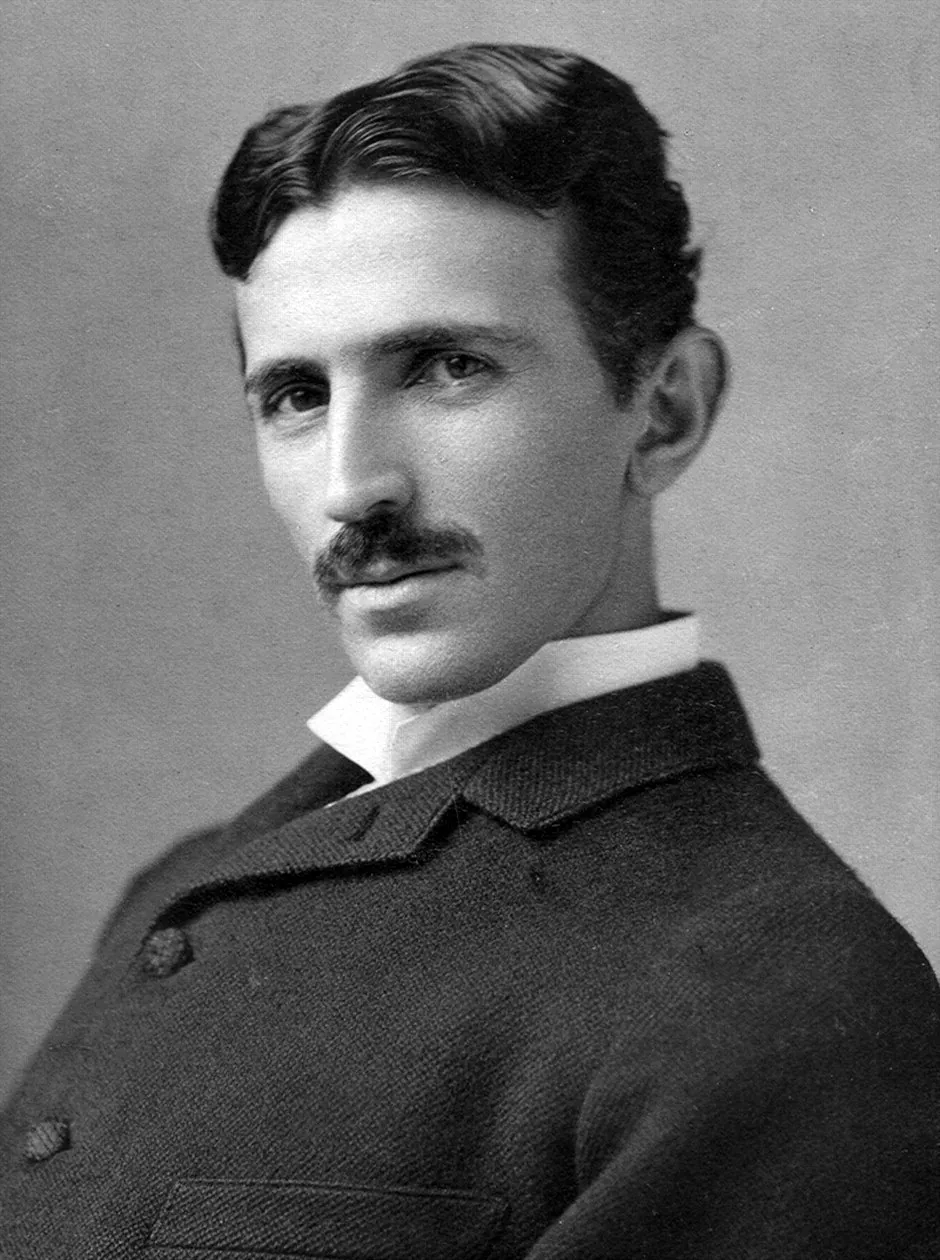
Nikola Tesla (1856–1943) is one of the most influential inventors in electrical engineering. Besides the alternating-current system, he worked intensively on high-frequency oscillations. In 1891 he presented the transformer named after him – the Tesla coil – which produces very high voltages at high frequency.
Georges Lakhovsky (1869–1942), a Russian-born engineer who lived in France, developed the so-called multiple wave oscillator in the 1920s and 1930s. He held the theory that living cells function like tiny oscillating circuits. His theses are not scientifically recognised, but they still shape the interest in frequency devices today.
1891
Nikola Tesla presents the Tesla coil.
1899
Tesla researches high frequency and wireless power transmission in Colorado Springs.
1929
Lakhovsky publishes “Le Secret de la Vie”.
1930s
Lakhovsky develops the multiple wave oscillator.
Today
Arthur Tränkle develops the Tesla Oscillator as a compact set for the home.

Product development
Arthur Tränkle and the Tesla Oscillator
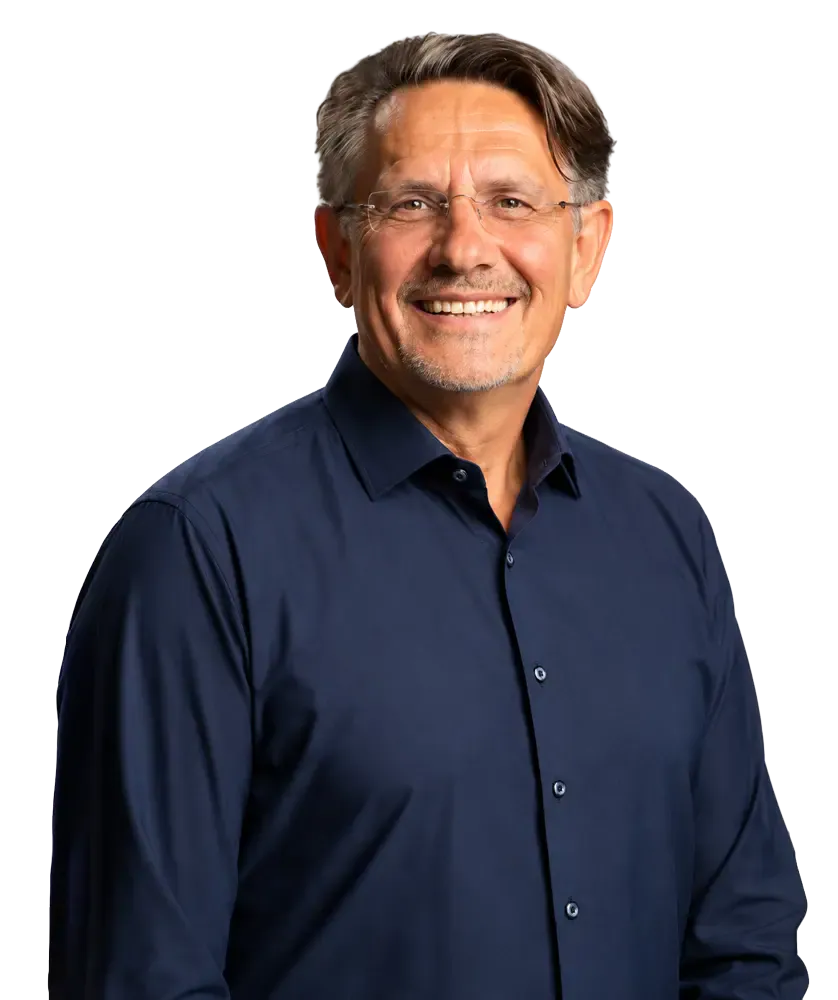
Arthur Tränkle developed the Tesla Oscillator. Building on the ideas of Tesla and Lakhovsky, he created a compact set that can be used at home without specialist knowledge.
The device has been further developed over time – we supply only the current original model.
Water & frequencies
Why water takes centre stage
Water has special properties: its molecules are linked by so-called hydrogen bonds that constantly rearrange themselves. This dynamic makes water a fascinating subject of research.
In the world of frequency devices, people often speak of “structured” or “hexagonal” water – the idea that oscillations can bring water into a more ordered state. The wooden hexagon in the set, with which you can make your own observations, is based on this idea.

Honestly assessed
What we can say – and what we can’t
Many claims circulate about frequency devices. So that you can form your own opinion, we make a clear distinction:
Technical data
Power supply, consumption, frequency and dimensions come from the manufacturer and describe the device itself.
Concepts & manufacturer’s information
Ideas such as structured water go back to Tesla, Lakhovsky and Arthur Tränkle. We present them as such.
State of science
There is no recognised scientific evidence for health effects. A permanent “hexagonal” structure of water has not been demonstrated either.
Personal experiences
Many users report their own observations. Such experiences are individual and cannot be generalised.
The Tesla Oscillator is an experiment kit for use on your own responsibility and not a medical device. It does not replace medical diagnosis or treatment. If you have health questions, please consult your doctor.
Good to know
Frequently asked questions
How does the Tesla Oscillator work?
A control unit generates a high-frequency signal with a carrier frequency of around 150 MHz (manufacturer’s specification). It travels through a cable to the hand probe, whose two antennas emit it into the surroundings as an electromagnetic field.
What does 150 MHz mean?
150 megahertz is 150 million oscillations per second. This range lies in the VHF band, slightly above FM radio (87.5–108 MHz).
Why is the device called the Tesla Oscillator?
The name refers to Nikola Tesla, a pioneer of high-frequency technology. “Oscillator” is the technical term for a circuit that produces a steady oscillation.
What is the LED test board for?
The board lets you see whether the device is working: near the hand probe its LEDs light up. Like a small antenna, the board picks up part of the high-frequency energy.
How does it differ from Lakhovsky’s multiple wave oscillator?
The historic multiple wave oscillator emitted a broad spectrum of many frequencies via ring-shaped antennas. The Tesla Oscillator, by contrast, works with a defined carrier frequency of around 150 MHz and a hand probe.

Your questions are welcome
Get to know the Tesla Oscillator at your own pace.
Call us or write to us – we take time for an honest conversation. No obligation and no pressure.